
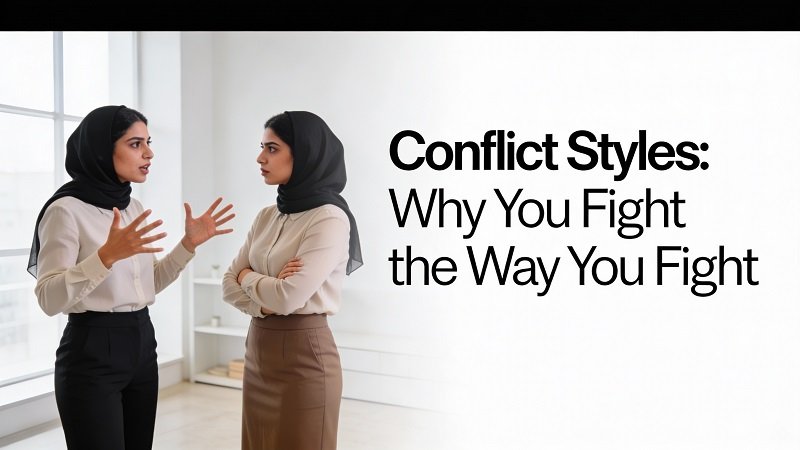

Conflict is not the problem in most relationships. The style of conflict is.
Two people can disagree about the same topic—money, time, jealousy, boundaries, family, texting—and have completely different outcomes. One couple argues, repairs, and gets closer. Another couple argues, shuts down, reopens the wound later, and slowly loses trust. The difference is often not love or compatibility. It’s conflict style: the emotional habits each person brings into tension.
Conflict styles are the “default settings” you rely on when you feel threatened, misunderstood, disrespected, or afraid. They are often automatic. Many people don’t even realize they have a style until they see their partner’s reaction—then the blame starts: “You always overreact,” “You never talk,” “You’re too sensitive,” “You’re so cold,” “You’re controlling.”
But here’s the truth: most people fight the way they fight for reasons that made sense at some point. Your conflict style is often a survival strategy—something you learned to protect yourself. The goal isn’t to shame yourself or your partner. The goal is to understand what’s happening and replace old protection with healthier communication.
This guide explains the most common conflict styles, why they develop, what they look like in real relationships, and how to change them without forcing fake calmness or pretending you don’t have feelings.
What Is a Conflict Style?
A conflict style is the pattern you use when you feel tension. It includes:
-
How you express frustration (direct, indirect, silent, intense, sarcastic)
-
How you handle emotional stress (calm, overwhelmed, avoidant, explosive)
-
What you fear in conflict (rejection, abandonment, shame, loss of control)
-
What you try to protect (independence, dignity, safety, connection)
-
How you repair (apologize, ignore, over-explain, avoid, reconnect physically)
Conflict styles are influenced by:
-
family upbringing
-
past relationships
-
personality and temperament
-
mental health and stress levels
-
cultural expectations around emotion
-
attachment and emotional safety history
You can change your conflict style, but first you have to see it clearly.
The Hidden Truth: Most Fights Are Not About the Topic
A lot of couples argue about small issues that symbolize bigger needs:
-
“You didn’t text back” often means: “I feel unimportant.”
-
“You didn’t defend me” often means: “I feel unsafe with you.”
-
“You’re always late” often means: “I can’t rely on you.”
-
“You don’t open up” often means: “I feel alone in this relationship.”
-
“Why are you so emotional?” often means: “I feel overwhelmed and powerless.”
When you understand conflict styles, you learn to stop debating surface topics and start addressing the real fear underneath.
The 7 Most Common Conflict Styles (and What They’re Really Protecting)
1) The Fighter (Confrontational / Intense Style)
What it looks like
-
Raises concerns immediately and strongly
-
Talks fast, pushes for resolution now
-
May raise voice, interrupt, repeat points
-
Feels uncomfortable with silence or delays
-
Escalates quickly when not heard
What it’s protecting
-
fear of being ignored
-
fear that the issue will be buried and never fixed
-
fear of losing power or respect
Strengths
-
brave about hard conversations
-
doesn’t avoid problems
-
can drive real change when respectful
Risks
-
intimidation (even without intending it)
-
turning conflict into a “win/lose” battle
-
exhausting the partner and creating shutdown
How to evolve this style
-
lower volume and speed to increase safety
-
ask questions before making accusations
-
use one issue at a time (no long lists)
-
practice pausing without panicking
Upgrade phrase
“I care about this, and I want to solve it with you. Can we slow down so we don’t hurt each other?”
2) The Avoider (Conflict-Avoidant Style)
What it looks like
-
minimizes issues: “It’s fine”
-
changes the subject
-
delays conversations indefinitely
-
avoids emotional topics
-
prefers peace over honesty
What it’s protecting
-
fear of emotional chaos
-
fear of saying the wrong thing
-
fear of being blamed or attacked
-
fear that conflict means relationship instability
Strengths
-
can stay calm in tense moments
-
reduces drama in some situations
-
often good at practical stability
Risks
-
unresolved issues pile up
-
partner feels alone and unheard
-
resentment builds silently
-
conflict explodes later over something small
How to evolve this style
-
learn to tolerate discomfort without running
-
schedule conversations instead of avoiding them
-
practice small honesty daily (so it’s not a big event)
-
share feelings in short sentences instead of long emotional talks
Upgrade phrase
“I want to talk about this, but I need 30 minutes to calm my mind. Let’s talk at 8.”
3) The Shut-Down (Stonewalling / Freeze Style)
What it looks like
-
goes quiet mid-conversation
-
blank stare, one-word answers
-
leaves the room
-
“I don’t know”
-
physically present but emotionally absent
What it’s protecting
-
nervous system overwhelm
-
fear of escalation
-
fear of being trapped
-
shame or panic response
This style is often less choice and more physiological. When the body feels threatened, it goes into freeze.
Strengths
-
can prevent saying hurtful things
-
can stop conflict from becoming worse (temporarily)
Risks
-
partner feels abandoned
-
the issue never gets resolved
-
shutdown becomes a control tactic if used repeatedly without repair
-
long-term emotional disconnection
How to evolve this style
-
name shutdown early (“I’m overwhelmed”)
-
use structured breaks with a return time
-
practice writing thoughts down if speaking is hard
-
learn calming tools (breathing, cold water, short walk) before returning
Upgrade phrase
“I’m shutting down. I’m not ignoring you. I need a break. I’ll come back at 7:30.”
4) The Critic (Blaming / Judgment Style)
What it looks like
-
focuses on what’s wrong with the partner
-
uses “always/never”
-
lectures, points out flaws
-
treats conflict like performance review
What it’s protecting
-
fear of vulnerability
-
fear of being powerless
-
fear of being disappointed again
-
desire to regain control through criticism
Strengths
-
notices patterns
-
can be direct about what needs improvement
Risks
-
creates shame
-
makes the partner defensive or distant
-
stops emotional intimacy
-
turns relationship into a constant “not good enough” vibe
How to evolve this style
-
replace identity attacks with behavior requests
-
express hurt instead of superiority
-
ask for what you need without insulting the person
Upgrade phrase
“When that happens, I feel hurt and insecure. What I need is ____.”
5) The Defender (Justifying / Explaining Style)
What it looks like
-
responds with explanations immediately
-
corrects details
-
focuses on being understood rather than understanding
-
argues about fairness: “That’s not what happened!”
What it’s protecting
-
fear of being seen as bad
-
fear of shame
-
fear of unfair blame
Strengths
-
values accuracy and truth
-
wants clarity
-
often logical and structured
Risks
-
partner feels unheard
-
emotional needs get missed
-
conflict becomes a courtroom instead of a connection moment
How to evolve this style
-
validate first, explain later
-
reflect what you heard before responding
-
ask: “What did you need from me in that moment?”
Upgrade phrase
“I hear that you felt disrespected. I’m sorry for that. Can I share what was going on for me after I understand your side fully?”
6) The Pleaser (Appeasing / Over-Apologizing Style)
What it looks like
-
apologizes quickly to end tension
-
agrees even when they don’t
-
avoids bringing up needs
-
fears anger and disappointment
What it’s protecting
-
fear of abandonment
-
fear of rejection
-
fear of losing connection
Strengths
-
caring, empathetic
-
quick to repair
-
values harmony
Risks
-
resentment grows
-
identity gets lost
-
the relationship becomes imbalanced
-
“peace” is built on silence, not truth
How to evolve this style
-
practice honest “no” and boundaries
-
replace panic apologies with real accountability
-
express needs calmly before they become emotional explosions
Upgrade phrase
“I want peace too, but I also need to be honest. Here’s what I need…”
7) The Scorekeeper (Resentful Accounting Style)
What it looks like
-
tracks who did what
-
uses past mistakes as weapons
-
“After everything I’ve done…”
-
struggles to let issues end
What it’s protecting
-
fear of being taken advantage of
-
fear of imbalance
-
fear that effort won’t be valued
Strengths
-
cares about fairness
-
notices unequal labor and emotional load
Risks
-
kills warmth and generosity
-
makes partner feel hopeless (“Nothing is ever enough”)
-
turns relationship into transactions, not connection
How to evolve this style
-
ask for clear agreements instead of collecting evidence
-
set boundaries early rather than storing resentment
-
practice appreciation alongside fairness
Upgrade phrase
“I’m starting to feel the effort is uneven. Can we agree on a fair plan going forward?”
Why You Fight the Way You Fight: The Deeper Drivers
1) Family patterns you absorbed
Many adults repeat what they saw growing up:
-
yelling as normal
-
silent treatment as normal
-
sarcasm as normal
-
avoiding emotions as normal
-
“winning” as normal
Even if you hated it, your nervous system learned it.
2) Your nervous system under stress
Conflict style isn’t only psychology—it’s biology.
When you feel threatened:
-
some people go into fight mode (intensity)
-
some go into flight mode (avoidance)
-
some go into freeze mode (shutdown)
-
some go into fawn mode (pleasing)
Understanding this helps you stop moralizing your reactions (“I’m bad”) and start regulating them (“I’m overwhelmed”).
3) Your attachment needs
Some people crave closeness and reassurance quickly.
Others crave space and autonomy to feel safe.
Neither is wrong—unless it becomes control or abandonment.
Many fights are actually “connection fights”:
-
One partner pursues → the other withdraws → the pursuer pursues harder → the withdrawer withdraws more.
Breaking that loop requires skill, not blame.
4) Unspoken expectations
People often fight because expectations were never discussed:
-
texting frequency
-
boundaries with friends
-
family involvement
-
money habits
-
privacy rules
-
emotional support style
When expectations are hidden, disappointment becomes personal.
The Most Common Bad Loop: Pursuer vs. Withdrawer
This is one of the most common relationship dynamics:
-
Partner A feels anxious and wants to talk now → pushes harder
-
Partner B feels overwhelmed and needs space → shuts down
-
Partner A feels abandoned → becomes louder/more intense
-
Partner B feels attacked → withdraws more
-
both feel unsafe and misunderstood
How to break it (simple)
-
The pursuer practices: softer start + request + patience
-
The withdrawer practices: structured break + return time + repair
A healthy pattern:
“I need to talk soon” + “I need space but I’ll return” = safety for both.
How to Identify Your Conflict Style (Quick Self-Check)
Ask yourself:
-
When tension rises, do I push harder or pull away?
-
Do I get louder or quieter?
-
Do I want resolution immediately or do I delay?
-
Do I focus on being right or being understood?
-
Do I apologize fast to end discomfort, even if I disagree?
-
Do I bring up the past often?
-
Do I shut down physically (tight chest, blank mind, numbness)?
Your answers show your default. Your partner’s answers show theirs. Most conflict comes from style mismatch, not evil intent.
The Conflict Style Upgrade: What Healthy Conflict Looks Like
Healthy conflict is not calm 100% of the time. It’s safe and repairable.
Healthy conflict includes:
-
respectful tone (even when upset)
-
one topic at a time
-
clear requests instead of accusations
-
breaks with return times
-
repair after conflict (apology + plan)
-
willingness to learn
Unhealthy conflict includes:
-
insults, threats, humiliation
-
disappearing for days
-
controlling behavior
-
constant blame and denial
-
repeating the same harm without change
A Practical Toolkit: What to Do During the Fight (Not After)
Tool 1: The Soft Start
Instead of:
“You never listen.”
Say:
“Can I share something? I’m feeling unheard and I want us to fix it.”
Tool 2: The Time-Out That Doesn’t Abandon
“I need 20 minutes. I’m coming back at 7:40.”
Tool 3: The One-Sentence Need
“What I need right now is reassurance.”
“What I need right now is space and calm.”
“What I need right now is a plan.”
Tool 4: The Repair Sentence
“I don’t like how that sounded. Let me try again.”
Tool 5: The End-of-Conflict Reset
“Okay, we didn’t solve everything, but we made progress. I love you and I’m on your side.”
You don’t need a perfect ending. You need a safe ending.
After the Fight: The Repair Conversation (Where Growth Happens)
Once calm returns, do a short repair conversation. Keep it structured:
-
What happened (facts only)
-
What each person felt
-
What each person needed
-
What you’ll do next time (one change each)
-
Appreciation (one sentence)
Example:
“Yesterday I felt ignored when the conversation ended suddenly. I needed reassurance that we’re okay. Next time, can we use a time-out with a return time? I appreciate you coming back to talk.”
This turns fights into learning, not damage.
Style-Specific Growth Plans (Practical)
If you’re the Fighter
-
Practice speaking slower than your emotion
-
Replace “You” statements with “I feel / I need”
-
Ask a question before making a conclusion
-
Train yourself to pause without panic
If you’re the Avoider
-
Schedule hard talks rather than escaping them
-
Practice one honest sentence per day
-
Learn that conflict can be safe
-
Don’t wait until resentment explodes
If you shut down
-
Name it early
-
Take a structured break
-
Return with one sentence (even if small)
-
Use writing as a bridge back to talking
If you criticize
-
Translate criticism into requests
-
Share the softer feeling underneath (hurt, fear, disappointment)
-
Stop using “always/never”
-
Practice appreciation daily to balance negativity
If you defend
-
Reflect and validate first
-
Ask what the other person needed
-
Explain later, briefly
-
Focus on repair more than winning the case
If you please
-
Practice boundaries and honest “no”
-
Don’t apologize just to end tension
-
Ask for your needs directly
-
Learn that honesty is safer than hidden resentment
If you keep score
-
Make agreements before resentment builds
-
Communicate imbalance early
-
Ask for fairness without punishment
-
Rebuild generosity with appreciation and clarity
When Conflict Style Becomes a Real Relationship Problem
Conflict style becomes dangerous when it creates emotional unsafety, such as:
-
threats
-
intimidation
-
humiliation
-
chronic stonewalling with no return
-
controlling behavior
-
repeated betrayal without accountability
In those situations, “communication tips” alone may not be enough. Safety and serious boundaries matter most.
FAQ: Conflict Styles
Why do we fight more with people we love?
Because closeness triggers deeper emotions: fear of loss, need for reassurance, and sensitivity to disrespect. Love raises the stakes.
Can two different conflict styles work together?
Yes—if both people understand their patterns, respect each other’s nervous systems, and build a shared conflict plan.
Is shutting down always manipulation?
Not always. Many people shut down from overwhelm. It becomes unhealthy when it’s used repeatedly to avoid responsibility or punish without repair.
How do I change my conflict style?
Start with awareness, then choose one behavior change you can repeat consistently: softer start, structured breaks, validation first, or one-topic conversations.
What if my partner refuses to change?
You can improve your side, but a healthy relationship requires mutual effort. If conflict stays unsafe or disrespectful, stronger boundaries are needed.
Conclusion
You fight the way you fight because your nervous system learned a “best way to survive” tension—often long before your current relationship. The goal is not to shame yourself or blame your partner. The goal is to understand your style, recognize the loop you get trapped in, and build a new plan that makes conflict safer.
Healthy conflict isn’t the absence of emotion. It’s the presence of respect, structure, repair, and growth. When conflict styles evolve, relationships become calmer—not because problems disappear, but because you finally know how to face them together.