
There’s a reason two people can experience the same relationship moment and feel completely different things.
One person thinks: “They’re busy. No big deal.”
The other thinks: “They’re pulling away. I need to fix this—now.”
One person wants to talk immediately.
The other wants to disappear for a while.
That difference isn’t only about mood. It’s often about attachment style—the pattern your mind and body learned for staying emotionally safe in close relationships. [conversation_history:summary]
Attachment styles aren’t labels meant to trap you. They’re more like a map: they show what you tend to do under stress, what you fear losing, and what helps you feel secure. They can also explain why you keep repeating the same painful loop—especially if your partner has a different style. [conversation_history:summary]
This post is a simple, practical guide with ✅ check marks, ⚠️ red flags, ✳️ scripts, and real-life examples. It’s designed to be SEO-friendly and ready to publish—while still reading like a human wrote it. [conversation_history:summary]
Attachment styles in one sentence each ✅
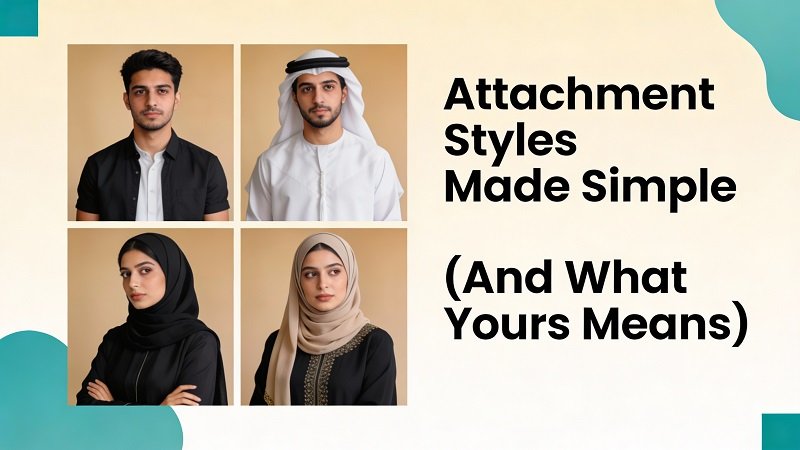
Most modern relationship conversations use four main attachment patterns:
-
✅ Secure attachment: “Closeness is safe, and space is safe too.” [conversation_history:summary]
-
✅ Anxious attachment: “I want closeness, but I’m afraid you’ll leave.” [conversation_history:summary]
-
✅ Avoidant attachment: “I want love, but closeness can feel like pressure.” [conversation_history:summary]
-
✅ Fearful-avoidant (disorganized): “I crave closeness, but I’m also afraid of it.” [conversation_history:summary]
Important: you’re not “one style forever.” Many people show different patterns depending on the relationship and stress level. You can also move toward secure attachment with healing, boundaries, and healthier partners. [conversation_history:summary]
The most useful truth: attachment is what happens when you feel threatened ⚠️
Attachment style shows up strongest when you feel:
-
ignored
-
criticized
-
uncertain
-
emotionally unsafe
-
like you might be rejected
In calm moments, most people look fairly secure. Under stress, your default strategy appears—your “relationship survival mode.” [conversation_history:summary]
That survival mode usually tries to solve one core fear:
-
Anxious strategies try to prevent abandonment. [conversation_history:summary]
-
Avoidant strategies try to prevent loss of autonomy or emotional overwhelm. [conversation_history:summary]
-
Fearful-avoidant strategies swing between both fears. [conversation_history:summary]
Knowing your survival mode doesn’t mean you’re broken. It means your nervous system is trying to protect you—sometimes in ways that backfire. [conversation_history:summary]
✅ Secure attachment: what it looks like in real life
Secure doesn’t mean perfect. Secure means flexible.
✅ Signs you lean secure
-
You can ask for what you need without shame. [conversation_history:summary]
-
You can handle conflict without assuming it’s the end. [conversation_history:summary]
-
You trust patterns more than panic thoughts. [conversation_history:summary]
-
You don’t need constant reassurance, but you appreciate it. [conversation_history:summary]
-
You can be close and still have your own life. [conversation_history:summary]
✅ How secure people behave in conflict
-
They talk about the issue rather than attacking identity. [conversation_history:summary]
-
They can say “I’m upset” without punishing or disappearing. [conversation_history:summary]
-
They try to repair quickly (not necessarily instantly). [conversation_history:summary]
✅ Growth tip if you’re secure
Secure partners can accidentally become “therapists” for insecure partners. Your job isn’t to fix someone’s attachment style—it’s to be consistent, communicate clearly, and keep healthy boundaries. [conversation_history:summary]
✅ Anxious attachment: what it means (and why it’s exhausting)
Anxious attachment isn’t “being dramatic.” It’s often a deep sensitivity to connection cues—tone, timing, warmth, distance.
✅ Signs you lean anxious
-
You overthink texts, tone, and timing. [conversation_history:summary]
-
You feel uneasy when things are calm (“Something must be wrong”). [conversation_history:summary]
-
You seek reassurance but it doesn’t last. [conversation_history:summary]
-
You fear being “too much,” but also fear being ignored. [conversation_history:summary]
-
You may protest when you feel distance (repeated calls, long messages, accusations, jealousy). [conversation_history:summary]
What anxious attachment is trying to do
✅ It’s trying to pull connection closer quickly so you feel safe. [conversation_history:summary]
The problem ⚠️
The more pressure you apply, the more a partner (especially avoidant) may back away. Then your fear intensifies and the cycle becomes self-fueling. [conversation_history:summary]
✅ Helpful tools for anxious attachment
-
Ask directly, don’t test: “Can you reassure me?” instead of silent punishments. [conversation_history:summary]
-
Use time-bound reassurance: “Can we talk for 10 minutes?” not “Promise forever.” [conversation_history:summary]
-
Regulate first: eat, sleep, breathe, walk—then talk. Anxiety hates tired bodies. [conversation_history:summary]
-
Track patterns, not moments: one late reply is not a relationship collapse. [conversation_history:summary]
✳️ Script for anxious partners
“I’m feeling anxious and my mind is telling scary stories. Can you reassure me with one clear sentence and a hug? I’m working on calming myself too.” [conversation_history:summary]
✅ Avoidant attachment: what it means (and why it’s misunderstood)
Avoidant attachment is often misread as “cold.” But many avoidant people do want love—they just associate emotional intensity with pressure, conflict, or loss of freedom.
✅ Signs you lean avoidant
-
You feel overwhelmed when someone needs “too much” closeness. [conversation_history:summary]
-
You shut down during conflict (silent, numb, or irritated). [conversation_history:summary]
-
You prefer solving things alone rather than “processing feelings.” [conversation_history:summary]
-
You may minimize problems (“It’s not a big deal”) to escape emotional heat. [conversation_history:summary]
-
You need space to think, but partners may experience it as abandonment. [conversation_history:summary]
What avoidant attachment is trying to do
✅ It’s trying to reduce emotional intensity so you feel safe and in control. [conversation_history:summary]
The problem ⚠️
If you repeatedly disconnect, your partner may protest harder, which makes you withdraw more. Then both people feel unsafe: one feels abandoned, the other feels trapped. [conversation_history:summary]
✅ Helpful tools for avoidant attachment
-
Name your need before you disappear: “I need 30 minutes to calm down, then I’ll come back.” [conversation_history:summary]
-
Offer structured closeness: predictable check-ins feel safer than spontaneous intense talks. [conversation_history:summary]
-
Practice emotional language in small doses: you don’t need long speeches; one honest sentence can change everything. [conversation_history:summary]
✳️ Script for avoidant partners
“I care about you. I’m feeling overwhelmed and I need a short break so I don’t say something hurtful. I will come back at 8:30 and we’ll talk.” [conversation_history:summary]
✅ Fearful-avoidant attachment: the push-pull pattern
Fearful-avoidant (sometimes called disorganized) can feel like living with two competing instincts:
-
“Come close, I need you.”
-
“Wait—too close—go away.”
It often forms when closeness was unpredictable: love and pain mixed together, or comfort and fear came from the same place.
✅ Signs you might be fearful-avoidant
-
You crave intimacy, then feel suffocated by it. [conversation_history:summary]
-
You idealize someone, then suddenly feel disgust or fear. [conversation_history:summary]
-
You swing between chasing and cutting off. [conversation_history:summary]
-
You fear abandonment but also fear being truly seen. [conversation_history:summary]
The core struggle
⚠️ Your nervous system can associate love with danger. So you want connection and feel threatened by it at the same time. [conversation_history:summary]
✅ Helpful tools
-
Therapy or guided healing can be especially helpful because the pattern is often rooted in trauma, not just habits. [conversation_history:summary]
-
Build slow trust: small agreements, consistency, and repair. [conversation_history:summary]
-
Avoid extreme decisions during emotional spikes (“I’m done” / “You’re everything”). [conversation_history:summary]
✳️ Script
“When I feel close, I sometimes panic and want to run. That’s my nervous system, not my truth. I need patience and steady communication while I work on this.” [conversation_history:summary]
The most common trap: anxious + avoidant pairing 🔥
This pairing is common because it’s familiar: each partner triggers the other’s core fear.
-
Anxious partner fears abandonment → seeks closeness, asks questions, protests. [conversation_history:summary]
-
Avoidant partner fears engulfment → withdraws, shuts down, minimizes. [conversation_history:summary]
-
Withdrawal triggers anxiety more → protest intensifies. [conversation_history:summary]
-
Protest triggers avoidance more → distance increases. [conversation_history:summary]
It’s not because either person is evil. It’s because both are using survival strategies that clash.
✅ The way out is structure + reassurance + boundaries:
-
anxious learns self-regulation and direct requests
-
avoidant learns clear communication and consistent return
-
both stop “punishment behaviors” (silent treatment, testing, threats)
✅ How to figure out your style (without a quiz)
You can learn a lot by answering these honestly:
When I feel insecure, I usually…
-
✅ seek closeness and reassurance
-
✅ withdraw and need space
-
✅ switch between both
In conflict, I tend to…
-
✅ talk it out quickly
-
✅ freeze/shut down
-
✅ escalate then regret
The thought that scares me most is…
-
“I’ll be left.”
-
“I’ll lose myself.”
-
“Love will hurt me.”
I feel most loved when…
-
I’m reassured and prioritized.
-
I’m respected and not pressured.
-
I’m understood and not judged.
Your answers usually point strongly to a pattern. [conversation_history:summary]
What your attachment style means for love ✅
If you’re anxious
✅ Your gift: loyalty, emotional depth, attentiveness. [conversation_history:summary]
⚠️ Your risk: over-focusing on threats and needing constant certainty. [conversation_history:summary]
If you’re avoidant
✅ Your gift: independence, stability under pressure, logical thinking. [conversation_history:summary]
⚠️ Your risk: emotional distance, shutting down, fear of vulnerability. [conversation_history:summary]
If you’re fearful-avoidant
✅ Your gift: intense insight, empathy, emotional intelligence (when safe). [conversation_history:summary]
⚠️ Your risk: push-pull cycles, sudden deactivation, difficulty trusting calm love. [conversation_history:summary]
If you’re secure
✅ Your gift: consistency, calm repair, healthy boundaries. [conversation_history:summary]
⚠️ Your risk: over-functioning for insecure partners or tolerating too much to “keep peace.” [conversation_history:summary]
✅ How to move toward secure attachment (practical, not perfect)
“Becoming secure” is less about changing your personality and more about changing your patterns.
✅ 1) Practice secure behaviors before you feel secure
-
Ask clearly instead of testing. [conversation_history:summary]
-
Take breaks with a return time instead of disappearing. [conversation_history:summary]
-
Repair quickly after conflict instead of punishing. [conversation_history:summary]
✅ 2) Choose partners who are emotionally consistent
A highly inconsistent partner can keep your nervous system on edge, especially if you’re anxious or fearful-avoidant. [conversation_history:summary]
✅ 3) Build predictable rituals
-
weekly check-in
-
goodnight routine
-
planned quality time
Predictability calms attachment fears. [conversation_history:summary]
✅ 4) Heal shame
Many insecure patterns are fueled by shame:
-
“I’m too needy.”
-
“I’m too much.”
-
“I’m broken.”
Shame increases survival behavior. Compassion reduces it. [conversation_history:summary]
✅ 5) Learn conflict skills
Secure couples don’t avoid conflict—they repair it. Communication skills, timeouts, and softer starts matter more than “who is right.” [conversation_history:summary]
✅ Boundaries for each style (so love doesn’t become chaos)
Boundaries for anxious partners
✅ No checking/monitoring behavior.
✅ No repeated reassurance questions in a row—ask once, then self-soothe.
✅ No threats (“I’m leaving”) as a way to gain closeness.
Boundaries for avoidant partners
✅ No disappearing without a return time.
✅ No silent treatment as punishment.
✅ No minimizing your partner’s feelings to escape discomfort.
Boundaries for fearful-avoidant partners
✅ No major relationship decisions during emotional spikes.
✅ No “push away then beg back” cycle—pause, regulate, then speak.
✅ No testing loyalty through drama.
Boundaries for secure partners
✅ Don’t become the fixer.
✅ Don’t accept disrespect just because you’re calm.
✅ Require mutual effort, not one-sided healing.
FAQ ✅
✅ Can attachment style change?
Yes—many people move toward secure attachment through consistent healthy relationships, therapy, and practicing new communication patterns. [conversation_history:summary]
✅ What if I’m anxious but my partner is avoidant?
That pairing can work if both people recognize the cycle and commit to structure: anxious partners practice self-soothing and direct requests, avoidant partners practice consistent communication and planned reconnection. [conversation_history:summary]
✅ Is one attachment style “better”?
Secure is the healthiest pattern, but insecure styles aren’t moral failures—they are learned survival strategies that can be updated. [conversation_history:summary]
✅ Should I tell my partner my attachment style?
Yes, if it’s used to improve communication (not as an excuse). A useful approach is: “Here’s what I tend to do under stress, and here’s what helps.” [conversation_history:summary]
If you want, share your target audience (dating / engaged / married) and the country (Saudi audience vs global), and the examples can be adapted to match cultural expectations around privacy, family involvement, and communication styles.