
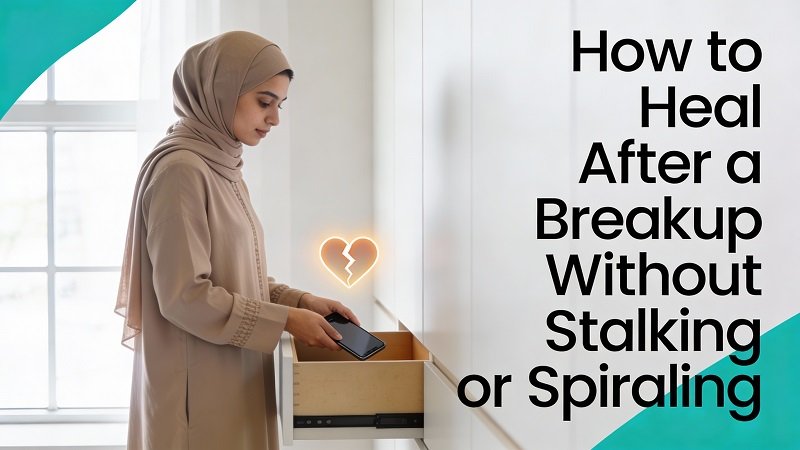

A breakup doesn’t only end a relationship. It breaks your routine, your identity, your future plans, and your “emotional home.” Even if you were the one who ended it, your nervous system still has to adjust to the loss of attachment.
That’s why stalking an ex (online or in real life) feels so tempting. It’s not always about wanting them back. Sometimes it’s about trying to reduce uncertainty. Your brain thinks: “If I know what they’re doing, I’ll feel calmer.”
But it doesn’t calm you. It hooks you.
You check once → you get a hit of information → your mind starts spinning → you check again to soothe the spinning → and suddenly your breakup becomes a full-time job.
This guide is for the person who wants to heal the right way:
-
✅ without humiliating themselves
-
✅ without obsessing
-
✅ without watching every story and like
-
✅ without turning grief into self-destruction
-
✅ without turning pain into a personality
You’ll get practical tools, scripts, and a clear plan—because when you’re heartbroken, you don’t need more motivation. You need structure.
First, normalize the urge (so you can stop it) ✅
If you’re stalking your ex online, you’re not “crazy.” You’re in withdrawal.
Attachment is like a bond your brain expects to maintain. When the bond is suddenly removed, your nervous system goes into alarm mode:
-
“Where are they?”
-
“What are they doing?”
-
“Are they okay?”
-
“Do they miss me?”
-
“Did I matter?”
These are grief questions. Social media provides a fast, toxic answer machine.
The issue is that stalking doesn’t give closure. It gives micro-trauma:
-
you see them smiling
-
you imagine they’re happy without you
-
you compare
-
you interpret
-
you get jealous
-
you feel ashamed
-
you check again
So the goal isn’t “never think about them.” The goal is: stop feeding the loop.
What “spiraling” really is (and why it feels unstoppable) ⚠️
A spiral is not just sadness. It’s when your mind and body lock into a repeating loop:
-
Trigger (song, photo, loneliness, night time, boredom)
-
Thought (“They replaced me,” “I’ll never recover,” “I wasn’t enough”)
-
Anxiety/Grief in body (tight chest, heavy stomach, racing mind)
-
Compulsion (checking their profile, rereading texts, driving past places)
-
Short relief
-
More pain (shame, jealousy, new questions)
-
Repeat
Spiraling feels like “thinking.” But it’s actually a nervous system pattern.
To heal, you need to treat it like a pattern—not like a philosophical debate you must solve.
✅ The Breakup Recovery Rule: Closure is a behavior, not a conversation
Many people wait for closure like it’s a gift the ex must provide:
-
“If we just talk one more time…”
-
“If I understand why…”
-
“If they admit what they did…”
-
“If I see them regret it…”
But most closure is created by your choices:
✅ unfollowing
✅ blocking
✅ deleting reminders
✅ stopping access
✅ accepting uncertainty
✅ redirecting attention
✅ grieving fully
Closure is built, not granted.
✅ The 3 types of stalking (so you can name your pattern)
1) Curiosity stalking
“I just want to know what they’re up to.”
2) Pain shopping (most common)
You look knowing it will hurt, because pain feels familiar and intense—like proof the relationship mattered.
3) Control stalking
You want to monitor their new life to reduce uncertainty or compete.
Be honest about which one you do. Healing starts with honesty, not shame.
What to keep private after a breakup (very important) 🔒✅
If you want to heal faster, protect your dignity. That means resisting the urge to:
-
post indirect quotes aimed at them
-
announce private details
-
overshare your pain publicly
-
“prove you’re okay” with forced content
-
involve mutual friends as messengers
Your breakup is already painful. Don’t make it public entertainment for people who don’t carry the consequences.
The No-Stalk Healing Plan (Practical Steps) ✅
This is the part most people need. Not theory—actions.
Step 1: Create “Zero Access” for 30 days (minimum) 🛑
If you keep seeing them, you keep resetting withdrawal.
✅ Do this today:
-
Unfollow/unfriend (or mute if you’re not ready to unfollow)
-
Block stories (at minimum)
-
Remove them from close friends
-
Delete chat shortcuts
-
Remove notifications
-
Block their number if you keep texting
-
Remove their friends who post them constantly (temporary)
If you think “blocking is childish,” ask yourself:
✅ Is healing childish? Or is dignity adult?
30 days is not forever. It’s detox.
Step 2: Delete your “relapse tools” 📱
These are the things you use to reopen the wound.
✅ Delete or archive:
-
screenshots of old chats
-
your “best moments” album
-
their contact shortcut
-
notes you wrote to them
-
your breakup draft messages
-
saved posts that remind you of them
If you can’t delete yet, move it into a locked folder and give the password to a trusted friend for 30 days.
Yes, that’s intense. Breakups are intense.
Step 3: Make a “Relapse List” (your personal triggers) ⚠️
Write down:
-
times of day you stalk (usually late night)
-
emotions that trigger it (lonely, jealous, angry, bored)
-
places that trigger it (bed, bathroom, car)
-
apps you use
-
what you usually search
This creates awareness. Awareness gives you choice.
Step 4: Replace the compulsion with a “2-minute action” ✅
A compulsion needs a substitute, not a lecture.
Choose 3 quick replacement behaviors:
✅ drink water + breathe 10 slow breaths
✅ do 20 squats / pushups / quick walk
✅ text a friend: “Talk me out of stalking”
✅ open notes and write: “What I’m feeling right now is…”
✅ play one specific calming track
✅ wash your face / shower
✅ change environment (stand up, move rooms)
Stalking is often your body seeking regulation. Give it regulation.
✅ The “Delay Technique” (simple, powerful)
When you feel the urge to check:
Tell yourself:
“I can check in 15 minutes.”
Then do a replacement behavior.
Most urges peak and pass like waves. You don’t need to kill the wave—just don’t surf it.
Increase delay gradually:
15 minutes → 30 → 60 → a day.
This trains your nervous system that you are in charge, not the urge.
The real reason you can’t stop checking: your brain wants certainty ⚠️
Overthinking after a breakup often asks questions that cannot be answered:
-
“Did they ever love me?”
-
“Was I used?”
-
“Was I the problem?”
-
“Do they miss me?”
-
“Are they happier now?”
These questions are attempts to control pain with analysis.
A better question is:
✅ “What do I need to do today to heal?”
You can’t solve the past like math. You can only choose your next step.
✅ Stop rereading messages (it’s emotional self-harm)
Rereading texts is a common spiral behavior because it creates a fake feeling of closeness. But it also:
-
reactivates memories
-
reopens hope
-
increases regret
-
triggers self-blame
If you want a practical boundary:
✅ No rereading messages for 30 days.
If you “need” the messages for legal or practical reasons, export them and remove them from your phone.
✳️ Scripts for the moments you feel weak
When you want to text them
✳️ “If I text, I will reset my healing. I can survive this feeling without contacting them.”
When you want to stalk them
✳️ “Looking will not give peace. It will give a new wound.”
When you romanticize the past
✳️ “I miss the good parts. I am not forgetting the full truth.”
When you blame yourself
✳️ “I can take responsibility without turning it into self-hatred.”
When you feel replaced
✳️ “Their next chapter does not define my value.”
✅ The “Reality List” (your antidote to idealization)
After breakups, the brain edits reality. It plays highlight reels.
Write a reality list:
-
ways you felt unsafe
-
times you felt ignored
-
conflicts that never improved
-
values mismatch
-
broken promises
-
disrespect moments
This is not to become bitter. It’s to protect you from returning to pain because you forgot why you left (or why it ended).
The hardest trap: “Maybe we can be friends” ⚠️
Sometimes friendship is possible—but not during withdrawal.
If you still:
-
want them
-
hate them
-
hope they’ll come back
-
feel triggered by their updates
-
feel jealous thinking of them dating
Then “friends” is a disguise for continuing attachment.
✅ A healthier timeline is:
No contact → emotional neutrality → then decide.
✅ What to do with mutual friends (without drama)
Mutual friends often keep you stuck because information leaks:
-
“They asked about you.”
-
“They were out with someone.”
-
“They seem fine.”
This becomes emotional poison.
✅ Boundary to mutual friends
✳️ “I’m healing, so I don’t want updates about them. If something is important, I’ll hear it later.”
If they don’t respect this, reduce access to them too—temporarily or permanently.
“What if they move on fast?” (the spiral question) 😣
This question hurts because it attacks your meaning:
“If they moved on, did I matter?”
But people move on for many reasons:
-
avoidance
-
distraction
-
rebound coping
-
ego repair
-
genuine readiness
It doesn’t necessarily measure love. It measures coping style.
✅ Your healing does not depend on their timeline.
Your goal is not to “win the breakup.”
Your goal is to rebuild your self-trust.
✅ The body plan: breakups live in the nervous system
If you treat healing like a mental project only, you’ll struggle. Your body needs recovery too.
Do these daily (simple basics)
✅ 20–30 minutes of movement
✅ protein + water (blood sugar affects anxiety)
✅ sunlight exposure
✅ sleep routine (even if imperfect)
✅ limit caffeine if it increases panic
✅ reduce alcohol (it increases impulsive texting and late-night spirals)
A calmer body makes a calmer mind. A calmer mind makes fewer compulsions.
✅ Emotional processing (how to grieve without drowning)
Grief isn’t optional. If you don’t process it, you act it out through stalking, rebounds, and obsession.
Healthy grief practices
✅ Write a letter you will never send
✅ Voice note your feelings (then delete)
✅ Journal: “What did I learn?”
✅ Talk to one safe person (not 10 people)
✅ Therapy if you feel stuck
✅ Ritual closure: pack items, clean space, rearrange room
A breakup is a psychological ending. Ritual helps the brain accept endings.
⚠️ “Spiral behaviors” to stop (even if they feel comforting)
These keep you stuck:
⚠️ checking their profile
⚠️ checking the new person
⚠️ rereading chats daily
⚠️ driving past places
⚠️ stalking their friends
⚠️ keeping gifts visible
⚠️ asking mutual friends for details
⚠️ posting for their attention
⚠️ “accidentally” calling
⚠️ making playlists that keep you crying for hours
Crying is fine. Feeding the spiral is not.
✅ The “Identity Rebuild” (the part nobody talks about)
Breakups hurt because you don’t just lose a person—you lose a version of yourself:
-
partner-you
-
future-wife/husband-you
-
“we” identity
-
routines and rituals
So healing requires building a new identity, not just “getting over them.”
Build a new identity in 3 areas
✅ Body: new routine, movement, sleep, grooming—physical self-trust
✅ Mind: learning, goals, projects—mental direction
✅ Community: friends, family, groups—social support
When your life grows, your obsession shrinks.
✅ 30-day recovery plan (simple and structured)
Week 1: Detox
✅ No access (mute/block/unfollow)
✅ Remove relapse tools
✅ Daily movement + water
✅ No late-night scrolling
Week 2: Stabilize
✅ Daily routine
✅ Journal once per day (10 minutes)
✅ Meet one friend
✅ Clean and rearrange your environment
Week 3: Rebuild
✅ Start a new habit (gym, course, walking, hobby)
✅ Create future goals (small and realistic)
✅ Reduce mutual-friend updates
Week 4: Strengthen
✅ Reflect: “What patterns do I never want again?”
✅ Write new standards for love
✅ Consider therapy if you’re still stuck in compulsions
Progress isn’t linear. But structure makes it faster.
When you should get extra help ✅
Seek professional support if:
-
you can’t stop compulsive checking
-
you’re not eating or sleeping
-
you’re having panic attacks
-
you’re using alcohol/drugs to cope
-
you feel unsafe with yourself
-
the breakup involved trauma or abuse
Needing help doesn’t mean you’re weak. It means you’re human.
FAQ ✅
✅ How long does it take to stop obsessing over an ex?
It depends on attachment level, the relationship length, and your access to triggers. Many people feel noticeably better after 30 days of true no-access, and significantly better after 60–90 days if they stay consistent.
✅ Is it okay to block my ex?
Yes. Blocking is a boundary, not a crime. If access causes spiraling, blocking is a mental health tool.
✅ What if I want them back?
Healing first is still the best move. If the relationship ever returns, it should come from stability—not desperation and surveillance.
✅ How do I forgive myself for stalking or begging?
Stop the behavior, learn from it, and treat it as a pain response. Shame keeps you stuck; self-respect helps you change.
Healing after a breakup is not about proving you didn’t care. It’s about proving to yourself that you can survive loss without losing dignity. One day you’ll look back and realize: the moment you stopped checking was the moment you started living again.
If you want, share whether your audience is mostly Saudi/Gulf, and whether the breakup theme is toxic relationship, ghosting, or long-term serious relationship—and I’ll tailor examples and scripts to match.