
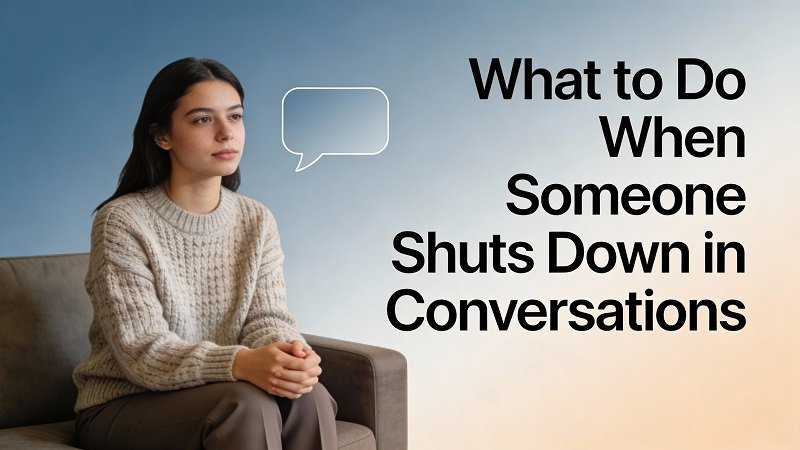

What to Do When Someone Shuts Down in Conversations
When someone shuts down—goes silent, leaves, gives one-word answers, or looks emotionally “gone”—it can feel like rejection. The instinct is to push harder: demand answers, chase, argue, or accuse. Unfortunately, pushing usually makes shutdown worse.
Shutdown is often a nervous system response: overwhelm, fear of conflict, shame, or feeling unsafe. It can also be a learned habit from childhood or past relationships.
The goal is to restore safety and structure—not to force talking in the moment.
Step 1: Identify what shutdown looks like
Shutdown can be:
-
silence
-
“I don’t know”
-
leaving the room
-
staring at the phone
-
cold tone
-
delayed responses for hours/days
Knowing the pattern helps you address it without panic.
Step 2: Don’t chase or attack
Avoid:
-
“Talk to me right now!”
-
“You’re immature.”
-
“You don’t care.”
These increase shame and overwhelm.
Try:
“I can see you’re overwhelmed. I’m not here to attack you.”
“We can pause, but we need to return to this.”
Step 3: Use the “Pause + Return” agreement
A shutdown-safe script:
“Let’s take a break for 30 minutes. We’ll talk again at 8:00. I’m not abandoning you, and I won’t let this disappear.”
The return time is crucial. Without it, shutdown becomes avoidance.
Step 4: Reduce the emotional load
When someone is shut down, keep sentences short and calm.
-
One topic
-
One request
-
One next step
Example:
“I want to understand what upset you. Can you tell me one sentence about what you’re feeling?”
Step 5: Offer choice
Choice reduces pressure.
-
“Do you want to talk now or after dinner?”
-
“Do you prefer voice or writing it down first?”
-
“Do you want a hug or space?”
Step 6: Address it later when calm
When things are calm, discuss the pattern:
“I noticed you shut down during conflict. What makes it hard to talk? What would help you feel safe enough to stay present?”
Then agree on a plan.
When shutdown becomes a deal breaker
If shutdown is used to punish, control, or avoid responsibility for days repeatedly, it can become emotionally unsafe. Healthy space includes return and repair.